Ant colony management is distinct from surface barrier spraying; surface pyrethroid sprays kill only the visible 5% to 10% of foraging workers, which frequently triggers "budding" in multi-queen species like odorous…
Ant colony management is distinct from surface barrier spraying; surface pyrethroid sprays kill only the visible 5% to 10% of foraging workers, which frequently triggers "budding" in multi-queen species like odorous house ants and pharaoh ants, multiplying single infestations into dozens of isolated satellite nests throughout wall voids. In contrast, systemic colony management utilizes non-repellent active ingredients such as fipronil and indoxacarb. Foragers cross treated transit pathways without detection, grooming and sharing food via trophallaxis to transfer the toxicant directly to larvae and the egg-laying queen before the colony recognizes the threat.
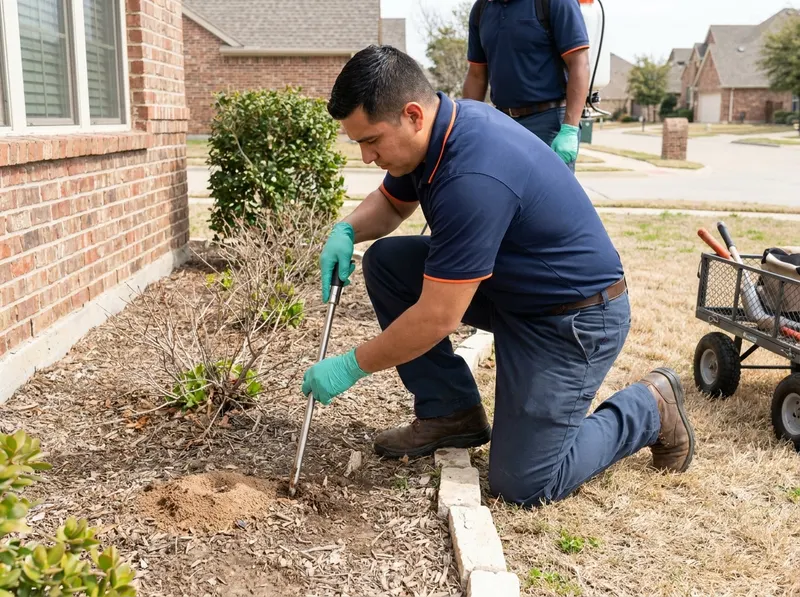
Dallas soil conditions heavily influence colony distribution. The expansive Houston Black clay common across Lakewood, Lake Highlands, and the M Streets develops structural fissures up to 36 inches deep during dry summer stretches. Red imported fire ants exploit these subsoil drought fractures, establishing multi-queen colonies that bypass standard topical granular treatments. Technicians utilize hydraulic sub-surface soil probes to deliver liquid termiticides directly into these structural fault lines. In wooded corridors like Kessler Park, Bishop Arts District, and Oak Cliff, carpenter ant colonies exploit moisture-compromised cedar and oak framing, nesting inside rooflines and wall cavities without consuming the wood as food, which requires targeted dry-foam structural void injections rather than soil drenches.
Treatment selection follows structural moisture and species nesting habits. In Preston Hollow and Far North Dallas, large manicured landscapes support high-density fire ant mounds alongside native rover ants; broadcasting seasonal biological growth regulators (IGRs) like pyriproxyfen renders the queen sterile, stopping brood development across large acreages. In tighter residential lots in Highland Hills, localized target drenches coupled with structural interior baiting fit specific interior incursions. Standard turnaround for full colony neutralization spans 7 to 21 days depending on colony maturity, moisture levels, and prevailing ambient temperatures. Direct inspection arrangements can be completed by calling (945) 410-2484.
Every job gets a firm, written price after a free on-site visit.
Tell us about your ant colony management job in Dallas and we'll send a clear, written quote, usually the same day.
 Elvanta Pest Pros