Attic insulation remediation resolves biohazards caused by nesting roof rats, eastern gray squirrels, and raccoons common to Dallas County. In established Dallas neighborhoods like Lakewood, Lake Highlands, and the M…
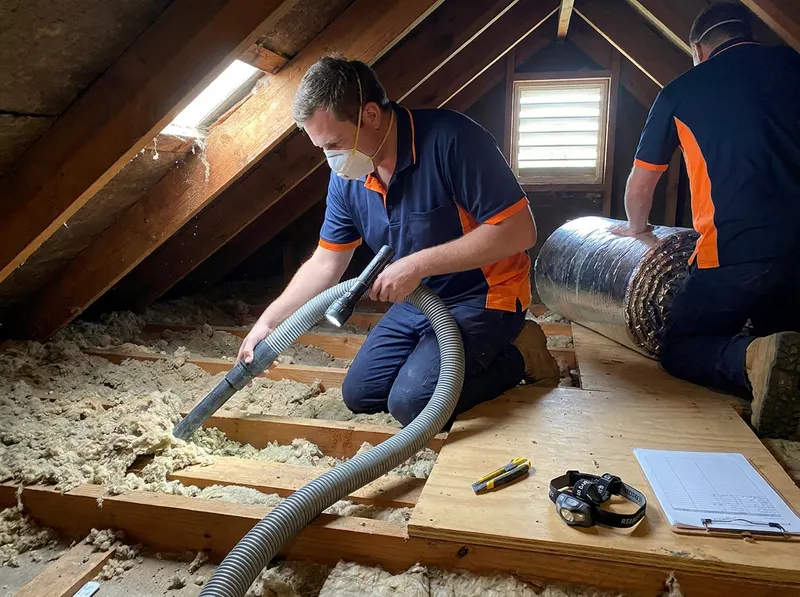
Attic insulation remediation resolves biohazards caused by nesting roof rats, eastern gray squirrels, and raccoons common to Dallas County. In established Dallas neighborhoods like Lakewood, Lake Highlands, and the M Streets, mature live oaks and pecan trees create direct canopy access to fascia boards, dormers, and soffits. When rodents nest in thermal batting, urine and pheromones saturate the fibrous material, which compromises the thermal boundary and draws future pests through scent trails. Replacing soiled batting with virgin insulation eliminates air-pathway contaminants, lowers summer heat load, and stops the release of airborne pathogens into the living quarters below.
Contaminated attics in Kessler Park, Preston Hollow, and Oak Cliff require a clear operational sequence: biological extraction, antimicrobial misting, mechanical air sealing, and re-insulation. Technicians run a commercial-grade 20-horsepower vacuum outside the structure, routing 4-inch to 6-inch hoses through gable vents or exterior access points to keep contaminated fiberglass dust from entering interior halls. If a home carries minor urine staining in an isolated 10-foot by 10-foot bay, spot remediation and targeted air sealing provide an efficient alternative to full-attic clearing. Conversely, widespread raccoon feces or extensive rat burrowing across an entire 2,000-square-foot floorplate demands complete clearing down to the ceiling joists, followed by an EPA-registered virucidal application. Raccoon latrines present roundworm (Baylisascaris procyonis) eggs that survive standard chemical sprays and require systematic manual bagging and physical disposal.
Thermal performance specifications in North Texas mandate strict insulation depth to manage triple-digit summer heat. The International Energy Conservation Code (IECC) prescribes an R-38 thermal resistance level for Zone 3, which translates to roughly 12 to 14 inches of blown-in fiberglass or
Tell us about your attic insulation remediation job in Dallas and we'll send a clear, written quote, usually the same day.
 Elvanta Pest Pros