Stinging insect pressure in Dallas County intensifies between May and October when regional heat accelerates colony reproduction. In neighborhoods like Lake Highlands, Lakewood, and the M Streets, mature trees and…
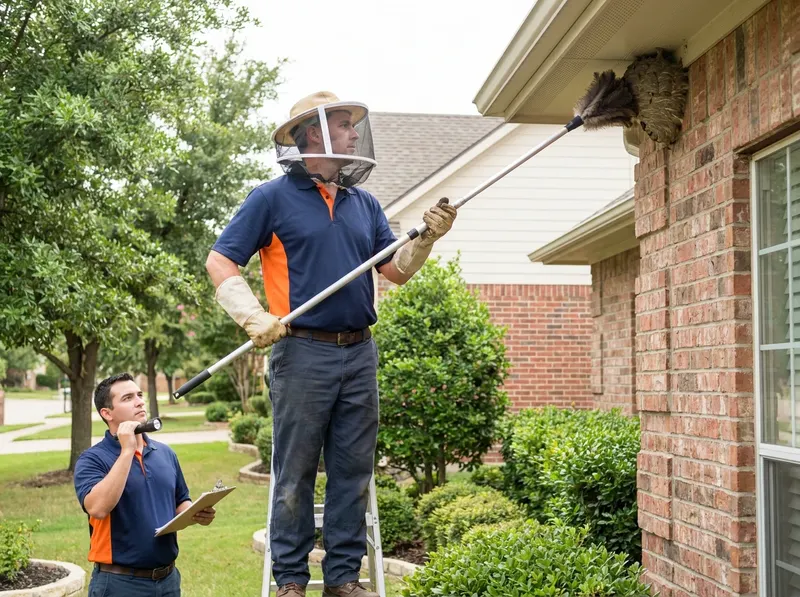
Stinging insect pressure in Dallas County intensifies between May and October when regional heat accelerates colony reproduction. In neighborhoods like Lake Highlands, Lakewood, and the M Streets, mature trees and architectural soffits on early-twentieth-century residential designs provide ideal void shelter for aerial paper wasps and bald-faced hornets. Ground-nesting southern yellowjackets frequently build subterranean colonies within decorative retaining walls, turf borders, and creek-adjacent soil deposits throughout Oak Cliff and Kessler Park. Stinging insect removal eliminates these active hives to prevent structural nesting expansion and territorial stings along high-traffic exterior entries.
Selecting professional stinging insect removal depends on nest visibility and entry hazards. Exposed paper wasp nests built beneath a porch overhang fit localized aerosol knockdown and physical scraping. In contrast, yellowjackets tunneling behind exterior brick veneer or within weep holes in Preston Hollow require pressurized dust injection directly into the wall void to eradicate the primary queen and internal comb. The functional trade-off between exterior localized removal and full structural void injection is project scope: treating an accessible eave nest takes 20 to 30 minutes, whereas accessing internal wall voids requires specialized micro-injector tools and secondary sealing to avoid trapping angry foragers inside interior living spaces.
Dallas properties near public greenbelts, such as the Dallas Arboretum and Botanical Garden or White Rock Lake, regularly host multiple predatory species that establish colonies in roof peaks, chimney caps, and storage sheds. While native honeybees require specialized live extraction and apiary relocation rather than chemical eradication, nuisance wasps and hornets necessitate physical takedown. Structural inspections determine whether exterior treatments suffice or if localized exclusion measures, like securing 1/4-inch mesh behind fascia returns in Bishop Arts District properties, are needed to prevent recolonization.
Every job gets a firm, written price after a free on-site visit.
Tell us about your stinging insect removal job in Dallas and we'll send a clear, written quote, usually the same day.
 Elvanta Pest Pros