Residential properties in North Texas face persistent arachnid intrusions due to the combination of hot summers, native clay soils, and dense insect prey. In established Dallas neighborhoods like Lakewood, Lake…
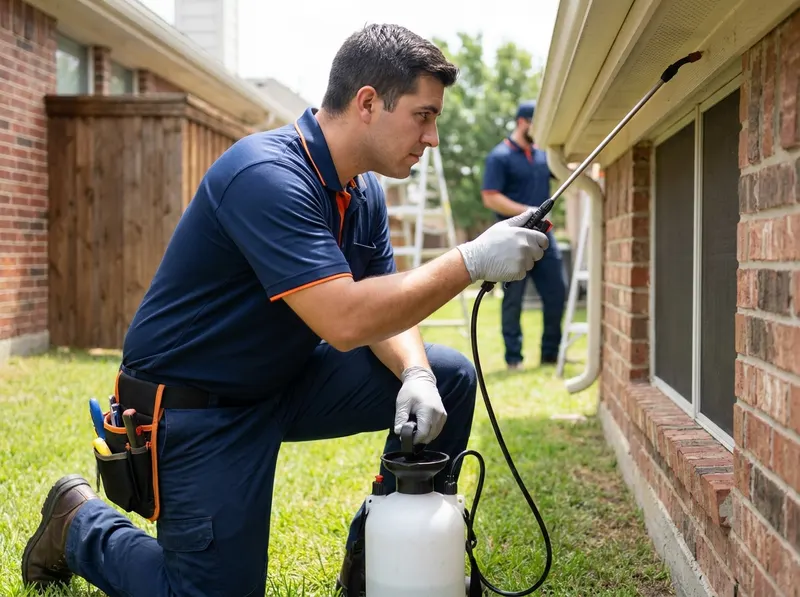
Residential properties in North Texas face persistent arachnid intrusions due to the combination of hot summers, native clay soils, and dense insect prey. In established Dallas neighborhoods like Lakewood, Lake Highlands, and Preston Hollow, mature tree canopies and landscape lighting attract flying insects, which in turn support heavy populations of common house spiders and yellow sac spiders along eaves and gutters. Near heavily vegetated pockets such as the Dallas Arboretum and Botanical Garden or White Rock Lake, elevated humidity fuels subterranean pest activity, creating expansive foraging zones for hunting species such as wolf spiders and jumping spiders along concrete slab foundations.
Venomous species require different control methodologies based on their specific biology. Brown recluse spiders (Loxosceles reclusa) frequent dry, undisturbed voids such as cardboard storage boxes in attics, wall voids, and drop ceilings throughout older homes in Kessler Park and the M Streets. Black widows (Latrodectus mactans) favor low-to-the-ground, humid recesses, nesting inside water meter boxes, pier-and-beam crawlspaces in Oak Cliff, and brick weep holes. While web-building spiders contact surface residues directly when traveling across treated surfaces, hunting spiders keep their bodies lifted high off the ground on elongated legs, requiring specialized microencapsulated formulations that adhere to their tarsi and grooming hairs rather than standard repellent sprays.
Structural design dictates treatment durability across Dallas County. Brick-and-mortar homes with open weep screeds allow spiders direct ingress into wall cavities, requiring insecticidal dust injection using silica-based active ingredients rather than perimeter liquid sprays alone. The trade-off between broad-spectrum exterior treatments and targeted interior applications centers on non-target impact and chemical longevity: an aggressive exterior application deters surrounding garden spiders that provide natural pest control, yet failing to suppress the exterior insect biomass results in inward spider migration as autumn temperatures cool in Far North Dallas and Highland Hills.
Every job gets a firm, written price after a free on-site visit.
Tell us about your spider management job in Dallas and we'll send a clear, written quote, usually the same day.
 Elvanta Pest Pros